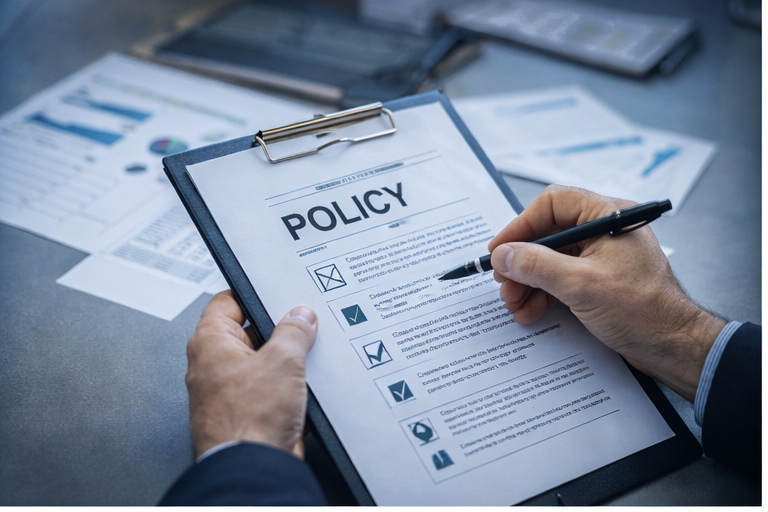
Policy management in a Project Management Consultancy (PMC) or E&I Consultancy refers to the structured system of rules, standards, and governance mechanisms that guide how projects are planned, executed, monitored, and closed. It ensures that every project follows consistent procedures, meets compliance requirements, and aligns with the client’s strategic objectives. Policy management is the framework that defines how projects must be managed. It establishes the rules, processes, and decision‑making structures that ensure quality, safety, compliance, and efficiency across all project phases.

At its core, it provides:

  • Standardization of project processes.
  • Risk reduction through clear rules and controls.
  • Compliance assurance with legal, contractual, and internal requirements.
  • Strategic alignment between project execution and the client’s goals.

Core components of policy management:

1. Policy development

ANUBIS E&I creates and maintains a full set of project management policies that define how the project must be run. These typically include:

  • Project initiation and approval policies.
  • Scope definition and change control policies.
  • Scheduling and planning standards.
  • Cost management and budgeting rules.
  • Risk management procedures.
  • Quality and safety policies.
  • Communication and reporting standards.
  • Documentation and data management rules.

These policies form the “rulebook” for the entire project team.

2. Implementation and communication

Policies must be understood and applied by all stakeholders. ANUBIS E&I ensures this through:

  • Training and onboarding sessions.
  • Clear documentation and templates.
  • Defined roles and responsibilities.
  • Accessible tools and systems for policy application.

This ensures that policies are not just written but actively used.

3. Monitoring and compliance control

ANUBIS E&I continuously checks whether the project follows the established policies:

  • Regular audits and compliance reviews.
  • Monitoring KPIs and governance metrics.
  • Identifying deviations from standards.
  • Implementing corrective actions or escalations.

This creates transparency and accountability across all contractors and teams.

4. Continuous improvement

Policies evolve as the project progresses. ANUBIS E&I updates them based on:

  • Lessons learned.
  • Changes in regulations or contract requirements.
  • New technologies or tools.
  • Performance analysis and stakeholder feedback.

This ensures that the policy framework remains effective and relevant.

SUMMARY: Effective policy management

  • Improves predictability of cost, schedule, and quality.
  • Reduces operational and strategic risks.
  • Strengthens governance and decision‑making.
  • Ensures consistent performance across all contractors.
  • Builds trust and transparency with the project owner.

It is one of the key mechanisms through which we protect the client’s interests and ensure professional project delivery.

Say, Hello !

[contact-form-7 id="86a109d" title="Sidebar-Form-1"]